TL;DR:
- How often sugar touches your teeth matters more than how much candy you eat.
- The candy that feels stickiest is often not the candy that lingers on teeth the longest.
- Lollipops, jawbreakers, and all-day grazing stretch one treat into a long acid attack.
- A set “candy time,” fluoride toothpaste, and sugar-free gum all help protect teeth.
Every November 1st, kitchen tables across the South Bay turn into candy trading floors. Kids swap, parents “inspect” the loot, and someone (Dad?) always asks which treats are the worst for teeth.
You may be in for a surprise.
Your Teeth Keep Score by the Snack, Not the Pound
Plaque is the soft film of germs that builds up on your teeth. When you eat sugar, those germs turn it into acid, and that acid pulls minerals out of your enamel. Saliva slowly puts those minerals back, but it needs quiet time between snacks to do its job. The acid attack is often thought to last about 30 minutes, though some measurements show it can run longer.¹
That is why frequency matters so much. A review in Caries Research, a scientific journal focused on tooth decay, found that eating less sugar without cutting how often you eat it does not seem to prevent cavities effectively.¹ Cutting back on how often you snack actually works better.¹
Some of the earliest proof came from Sweden in the 1940s and 1950s. In a study at Vipeholm Hospital, adding a large amount of extra sugar at mealtimes did not raise cavity risk, but adding sugary snacks between meals did.¹ The biggest jumps in decay showed up in the groups given treats like caramels and toffees between meals.² (As a side note, that study also has a dark history. It was done on residents of a hospital for people with intellectual disabilities, without their consent, and today it is taught as a lesson in research ethics.²)
The "Sticky Candy" Rule Needs an Update
Here is the part that surprises most people. In a study in the Journal of Dental Research, people rated 21 foods by how sticky they seemed. Researchers then measured how much of each food actually stayed on teeth. They found no link between the two.³
Cookies, crackers, and potato chips clung to teeth the most. Caramels, jelly beans, and milk chocolate bars were among the foods that stuck around the least.³ The researchers concluded that people cannot judge which foods linger, so “avoid sticky foods” on its own is weak advice.³
In other words, the chewy caramel may have been framed.
The Real Troublemakers Take Their Time
This brings us to the heart of the candy bowl debate: the treat you pick matters less than how long, and how often, sugar sits on your teeth.
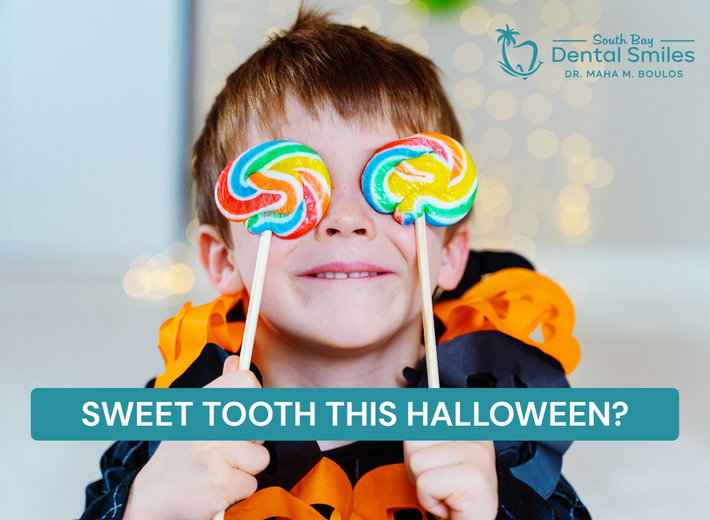
That puts slow-melting candy near the top of the naughty list. A commentary in the British Dental Journal noted that lollipops and jawbreakers melt slowly, and finishing one often takes more than 15 minutes.⁴ Some kids even make a game of keeping a jawbreaker in their mouth as long as they can.⁴ That adds up to a long, slow soak for enamel.
Sour candy adds another wrinkle. Many sour candies, even sugar-free ones, contain acids such as citric acid. These can drop the mouth’s pH (a measure of how acidic something is) below 5.5, the point where enamel starts to dissolve.⁴
Then there is the sneakiest villain of all: the candy bowl on the counter. Grabbing a piece every hour turns one treat into many small acid attacks, with little recovery time in between.¹
The Unofficial Candy Ranking
Best bets: Chocolate and other candy eaten quickly, in one sitting, ideally right after a meal. Milk chocolate clears from teeth faster than many people expect.¹ ³
Proceed with caution: Lollipops, jawbreakers, and sour candies, which keep sugar or acid in the mouth the longest.⁴
Worst offender: The all-day grazing habit, no matter what is in the bowl.¹
Your Post-Trick-or-Treat Game Plan
Pick a candy time. Let kids enjoy a handful after dinner, then close the bag until tomorrow. Fewer sugar visits give enamel more time to recover.¹
Brush twice a day with fluoride toothpaste. The same Caries Research review found that when people use fluoride toothpaste well, the link between sugar and cavities becomes very weak or disappears.¹
Chew sugar-free gum. A meta-analysis, which pools results from many studies, looked at 12 trials and found that sugar-free gum cut new cavities by about 28 percent compared with not chewing gum.⁵ The authors called the evidence tentative, since results varied and the trials were of moderate quality.⁵
Keep up with regular checkups. Routine exams and cleanings can spot early enamel wear while it is still small.
When it comes to Halloween candy, your teeth care less about what is in the bag and more about how often you invite sugar to the party.
Sources
1. van Loveren C. “Sugar Restriction for Caries Prevention: Amount and Frequency. Which Is More Important?” Caries Research, 2019. https://karger.com/cre/article/53/2/168/97265/Sugar-Restriction-for-Caries-Prevention-Amount-and
2. eviDent Foundation. “Case Study 1: The Vipeholm Caries Study.” Human Research Ethics Training. https://www.evident.org.au/training/human-research-ethics/case-studies/case-study-1-the-vipeholm-caries-study
3. Kashket S, Van Houte J, Lopez LR, Stocks S. “Lack of Correlation Between Food Retention on the Human Dentition and Consumer Perception of Food Stickiness.” Journal of Dental Research, 1991. https://doi.org/10.1177/00220345910700100101
4. Brand HS. “Summary of: Are sugar-free confections really beneficial for dental health? Commentary.” British Dental Journal, 2011 (via University of Amsterdam repository). https://dare.uva.nl/record/1/364070
5. Newton JT, et al. “A Systematic Review and Meta-Analysis of the Role of Sugar-Free Chewing Gum in Dental Caries.” JDR Clinical & Translational Research, 2020. https://journals.sagepub.com/doi/abs/10.1177/2380084419887178